◇ Whole-food botanicalPillar 1
Mexico Cactus (Nopal)
Tradition meets modern wellness.
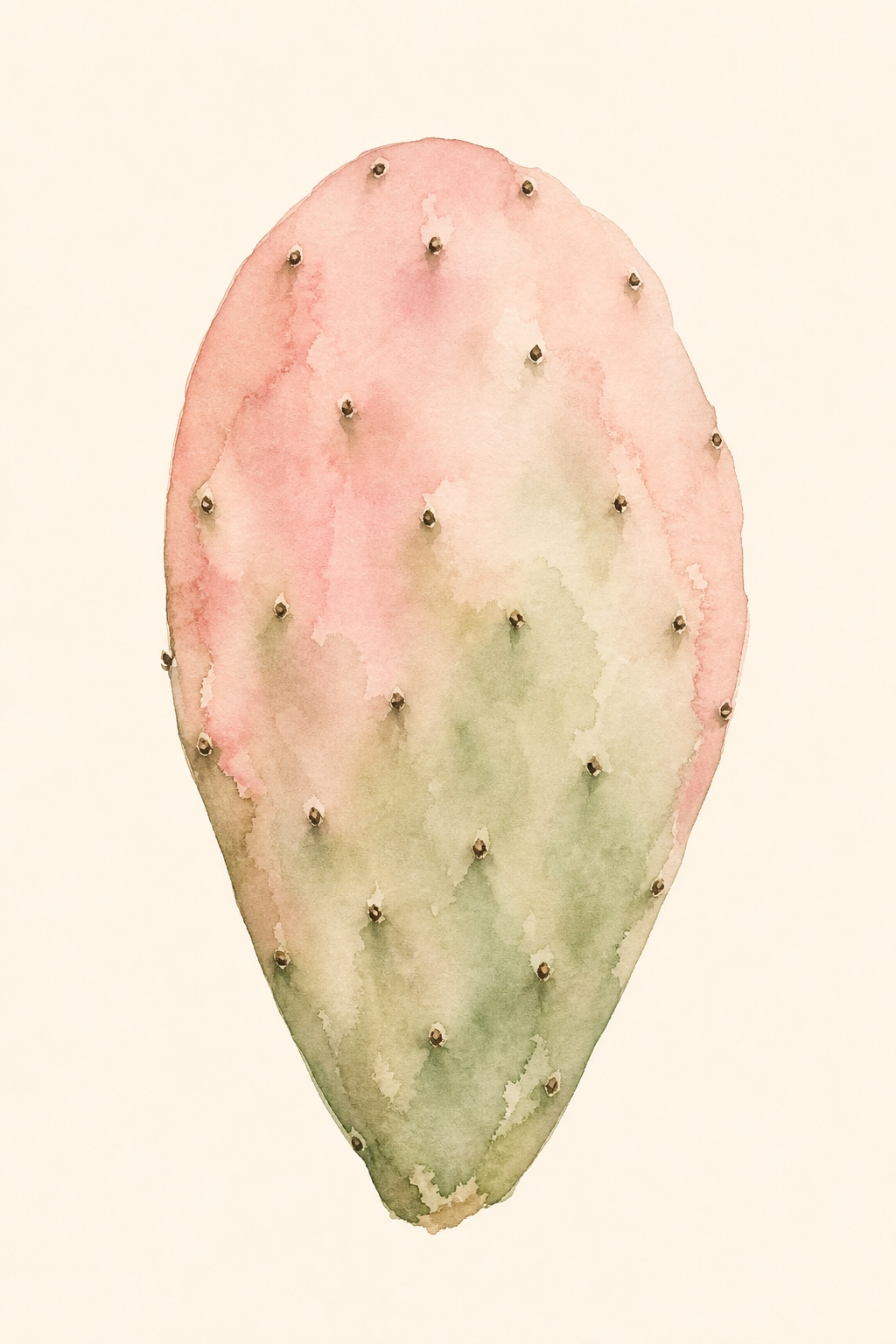
The fleshy pads of the prickly pear cactus (Opuntia ficus-indica), used in Mexican kitchens and traditional medicine for centuries. A whole-food source of soluble fibre, betalain pigments and plant antioxidants.
- Botanical name
- Opuntia ficus-indica
- Common names
- Nopal, prickly pear, tuna cactus
- Traditional use
- Mexico, Mediterranean — centuries
- Role
- Pillar 1 — botanical foundation
◇ TL;DR
- What: The fleshy pads of the prickly pear cactus (Opuntia ficus-indica) — Mexico's national plant, used as food and folk medicine for centuries.
- Brings to the formula: Soluble fibre, betalain pigments (the colour molecules that double as antioxidants), trace minerals.
- Tradition: Long-established culinary use in Mexico, plus traditional folk reputation in women's wellness.
- Role: The first of three plant pillars in Beyond Cactus+ — the foundation.
Where the cactus comes from.
Opuntia ficus-indica — known in Spanish as nopal and in English as the prickly pear or Indian fig cactus — is native to Mexico, where it has been cultivated for thousands of years. It is so culturally important to Mexico that it appears at the centre of the national flag, beneath the eagle.
The plant is famously hardy. It thrives in arid soils where little else will grow, which is part of why it has spread so widely beyond its origin: it now grows across the Mediterranean, North Africa, parts of the Middle East, India and the Australian outback. But the food and herbal tradition starts in Mexico.
For an open-access botanical and historical overview, see the Wikipedia entry on Opuntia ficus-indica. For the published research record, search "Opuntia ficus-indica" on PubMed.
What's actually in nopal.
The fleshy pads (cladodes) — the part used in Beyond Cactus+ — contain three categories of compounds we care about:
- Soluble fibre — including pectin and mucilage, which give nopal its slightly viscous quality. Soluble fibre has well-studied effects on satiety, post-meal glucose response and gut microbiome support.
- Betalains — pigment molecules unique to a small group of plants (beetroot is the other famous one) that double as antioxidants. The bright pinks and reds of prickly pear fruit are betalains; the green pads contain a different palette of related compounds.
- Trace minerals and amino acids — calcium, magnesium, potassium, plus a varied amino-acid profile typical of leafy plant tissue.
Tradition meets formulation.
Nopal has a long folk reputation across Mexican and Mediterranean traditions for supporting digestive comfort, blood sugar balance, and women's wellness across the cycle. We don't treat folk history as a substitute for clinical evidence, but it is the reason nopal has been studied in modern research at all — and modern studies have begun to characterise its effects on post-meal glucose response, lipid profile, and antioxidant capacity.
For Beyond Cactus+, nopal serves as the first plant pillar — the traditional, whole-food botanical foundation that the more specialised second and third pillars build on top of.
How nopal pairs with the rest of the formula.
Mexico cactus is the foundation. The other two pillars layer on top:
- Florac™ 10-plant antioxidant complex — concentrated polyphenol coverage from ten plants including olive, grape, pomegranate, green tea, bilberry and broccoli.
- Himalayan Tartary Buckwheat — the natural source of 2-HOBA (hobamine), a selective scavenger of isolevuglandins from lipid oxidation.
Plus a seven-berry mix (blueberry, blackcurrant, raspberry, elderberry, red grape, strawberry, cranberry) for additional anthocyanin density.
Safety, interactions, and who should ask first.
Nopal at food-level intake is well-tolerated. The most relevant interaction to flag is with diabetes medication: traditional and modern evidence suggests nopal can support healthy blood sugar levels, so combining it with insulin or oral diabetes drugs could in principle produce additive effects. If that applies to you, please speak to your doctor before starting.
We also recommend caution if you are pregnant, breastfeeding, or actively trying to conceive — not because nopal itself is risky, but because the wider Beyond Cactus+ formula is a concentrated daily ritual, and concentrated botanical regimens in those phases of life are best reviewed against your individual care plan.
Frequently asked questions.
- Is nopal cactus safe to take daily?
- Nopal (Opuntia ficus-indica) has been a staple food in Mexico for centuries — eaten fresh in salads, grilled, juiced. Daily intake at food levels is well-tolerated by most adults. The cactus powder in Beyond Cactus+ stays comfortably within food-level dosing. As always, consult your doctor if you are pregnant, breastfeeding, on prescription medication (especially diabetes medication, since some studies suggest nopal can lower blood sugar), or have a chronic condition.
- Can it lower blood sugar too much?
- Nopal has a long traditional reputation for supporting healthy blood sugar, and modern studies have explored that effect. If you are on insulin or oral diabetes medication, please discuss Beyond Cactus+ with your doctor — combining the two could potentially produce additive effects on blood glucose. For most healthy adults, the food-level intake in Beyond Cactus+ is unlikely to cause issues.
- Is the cactus in Beyond Cactus+ the same as the prickly pear fruit?
- Beyond Cactus+ uses powder made from the fleshy pads (cladodes) of Opuntia ficus-indica — the same plant that produces the prickly pear fruit, but a different part. The pads are the traditional culinary and herbal ingredient in Mexican kitchens; the fruit is consumed separately. Both come from the same species.
- Is it actually from Mexico?
- Opuntia ficus-indica is native to Mexico and is the country's national plant — it appears on the Mexican flag. Today the species also grows wild and is cultivated across the Mediterranean, North Africa and parts of Asia. We refer to it as 'Mexico cactus' on the box to honour its origin and traditional culinary use.